When people on Blurt talk about AI, the conversation almost always goes in the same direction: “It only produces low-quality spam to farm rewards.” And yes, there is some truth in that—AI has indeed been misused to flood blockchains with soulless, copy-paste posts. But this is not the full story. AI can also be a powerful ally for the opposite cause: helping curators identify and support genuine creators.
Curation on a blockchain like Blurt is both crucial and demanding. If you do it manually, it requires an enormous investment of time: checking profiles, reading posts carefully, evaluating originality, looking at engagement, and cross-verifying activity patterns. It’s a job that can feel endless, and even with the best intentions, it is easy to make mistakes. On the other hand, if you try to automate curation blindly—without context or intelligence—you risk rewarding the wrong accounts, reinforcing spam, and discouraging authentic contributors.
This is where AI can help. Not by replacing human judgment, but by acting as a smart assistant—analyzing large amounts of account data quickly, pointing out red flags, and highlighting accounts that truly bring value. In other words, AI can reduce the noise and let curators focus their limited time where it matters most.
It’s also important to be clear: not all AI-generated content is the same. In my view, there are two distinct categories of AI users on Blurt:
- The spam farmers – those who use AI (and stock images from sites like Pixabay) to produce generic, impersonal, and ultimately worthless content. Their posts are interchangeable, with no soul and no personal touch.
- The creative enhancers – those who use AI as a tool to better express themselves. They may use it to refine their writing, structure their ideas, or enrich their storytelling, but the result remains personal, authentic, and connected to who they are. These are the authors who use AI to increase quality, not replace identity.
Artificial Intelligence is no longer a niche experiment. Over the last few years, its progress has accelerated at a breathtaking pace. What started as basic text generators or simple image filters has now evolved into sophisticated systems capable of reasoning, analyzing complex datasets, and even connecting with the outside world in real time.
We are living through a moment similar to the early internet days: at first, people dismissed websites as “just digital brochures,” only to later realize they would transform the entire global economy. AI today feels very similar—many underestimate its impact, while others already see it reshaping entire industries.
Until recently, most AI models were closed environments: you gave them a prompt, and they gave you an answer based only on their training. Useful, yes, but limited. The real turning point came with the rise of MCP connectors (Model Context Protocol). Instead of being isolated, AI systems can now connect directly to external services, databases, and blockchains.
This means two things:
- Greater accuracy and usefulness. Instead of “guessing,” AI can pull in real, up-to-date information from trusted sources.
- Practical integration. AI can interact with platforms we use every day, from productivity tools to decentralized social networks like Blurt.
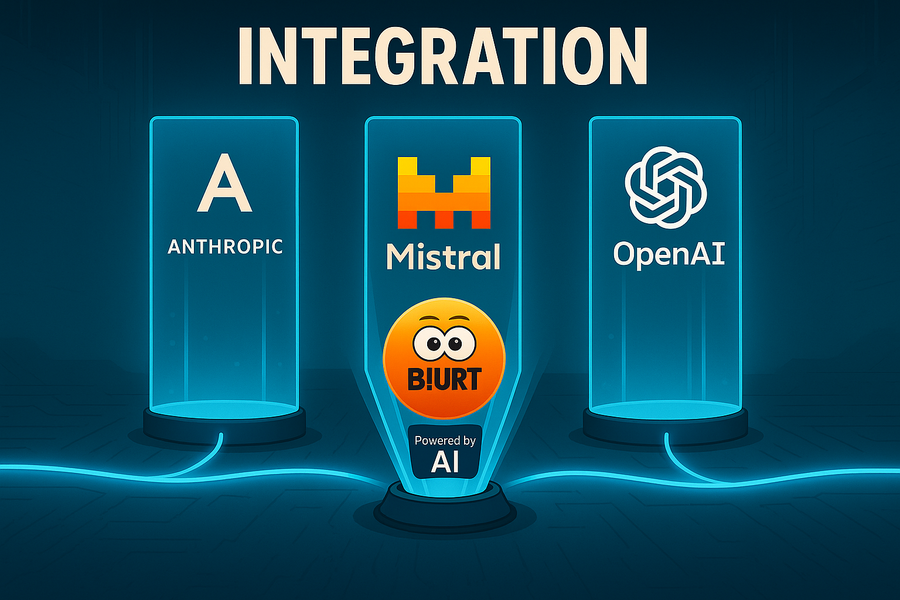
It’s no surprise that the major players—Anthropic (Claude), Mistral AI, and OpenAI (ChatGPT)—are embracing MCP. With connectors, AI stops being a toy for generating text and becomes a real assistant, capable of helping us work, research, and make better decisions.
For a community like Blurt, which thrives on decentralized content and human curation, this is a huge opportunity. AI can now analyze blockchain data directly, detect patterns that humans might miss, and highlight accounts worth supporting—all while leaving the final judgment to the human curator.
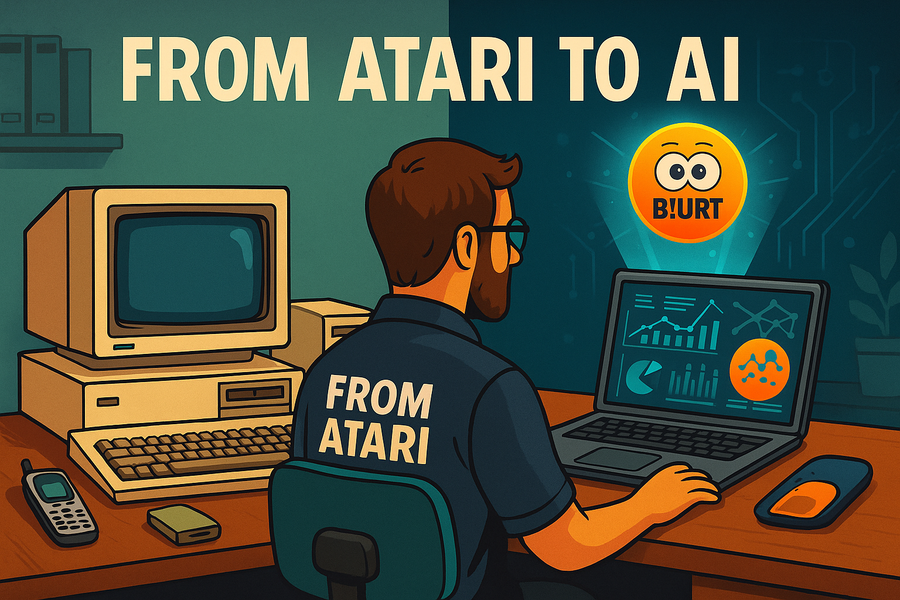
I consider myself lucky to have witnessed several waves of technological revolutions firsthand. Each of them has changed not only how we communicate, but also how we live and create.
- The Home Computing Era – I was 14 when my father came home one evening carrying an Atari ST 520 he had bought second-hand from a colleague. That moment was a turning point for me. Suddenly, computing was no longer something abstract or reserved for specialists—it was sitting right there in our living room. I spent hours gaming, learning, and discovering a new world.
- The Internet Era – a few years later, I got my first modem: a US Robotics Sportster 33.6K. That strange device opened the door to the global network. I still remember the hiss and crackle of the dial-up connection, and the magic of discovering that information, conversations, and entire communities were just a few clicks away. It felt like the world had suddenly become limitless.
- The Mobility Era – when I started working, one of my first purchases was a Nokia 3310. Like many in my generation, I felt the thrill of carrying a tiny piece of the future in my pocket. It wasn’t just about making calls—it was about freedom, independence, and the first step toward the connected life we take for granted today.
Now, decades later, I feel we are living through a fourth revolution: the era of Artificial Intelligence.
That’s why I follow AI with such passion. I recognize the same disruptive energy I felt the first time I connected my modem or switched on the Atari. And I’m convinced: those who embrace AI will open new doors of opportunity, while those who ignore it risk being left behind, as many were when they underestimated the internet revolution.
And for Blurt, the question is simple: will we let AI be a flood of meaningless spam, or will we harness it as a tool to highlight genuine voices and strengthen our community?
Looking back, I can see how much a single event shaped the course of my life. When my father came home with that second-hand Atari 520 ST, he probably didn’t imagine that it would determine my entire career. I wasn’t exactly a model student at school, but that machine opened a door I didn’t even know existed. It gave me something school had failed to spark in me: the desire to learn. From that moment on, computers became not just a hobby, but a passion that eventually guided my studies and my career in IT—right up to today, at the age of 53. For that, I’ll always feel grateful to my father.
That same curiosity still drives me. Every time a new technological wave appears, I feel the same excitement I did as a teenager typing on that Atari. And today, that wave is Artificial Intelligence.
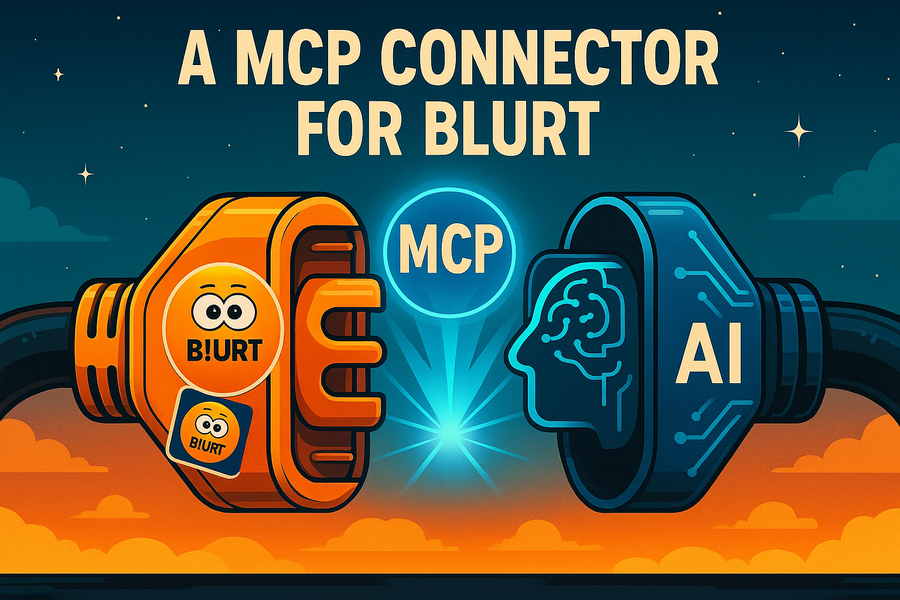
Recently, while exploring the new MCP connectors (Model Context Protocol), I stumbled upon a project for Hive: Hive MCP Server. Instantly, my curiosity was piqued. If Hive could have such a connector, why not Blurt?
So I decided to try building one myself. For me, this was not just about playing with code—it was about bringing the blockchain I care about into the next technological revolution. A Blurt MCP connector means that AI can directly interact with our blockchain:
- retrieving posts and account histories,
- analyzing curation patterns,
- evaluating content and engagement,
- and ultimately helping curators make better-informed decisions.
When I first looked at the Hive MCP connector, I realized it was a great experiment—but also that it had some limitations. Since it integrates sensitive operations like voting and transfers, it can only run locally on a desktop client such as Claude, using the StdioServerTransport. That means it’s not really usable in other contexts, like on the web or on a smartphone.
For Blurt, I wanted something different. My idea was to build a connector that could be used remotely, accessible not only from desktop clients but also from a browser or a mobile device. That’s why I chose to implement it with StreamableHTTPServerTransport. This makes it much more flexible: it can serve as a lightweight web API that any AI model with MCP support can call.
At this stage, what I’ve created is just a proof of concept. But the potential is exciting. The long-term vision could be much bigger:
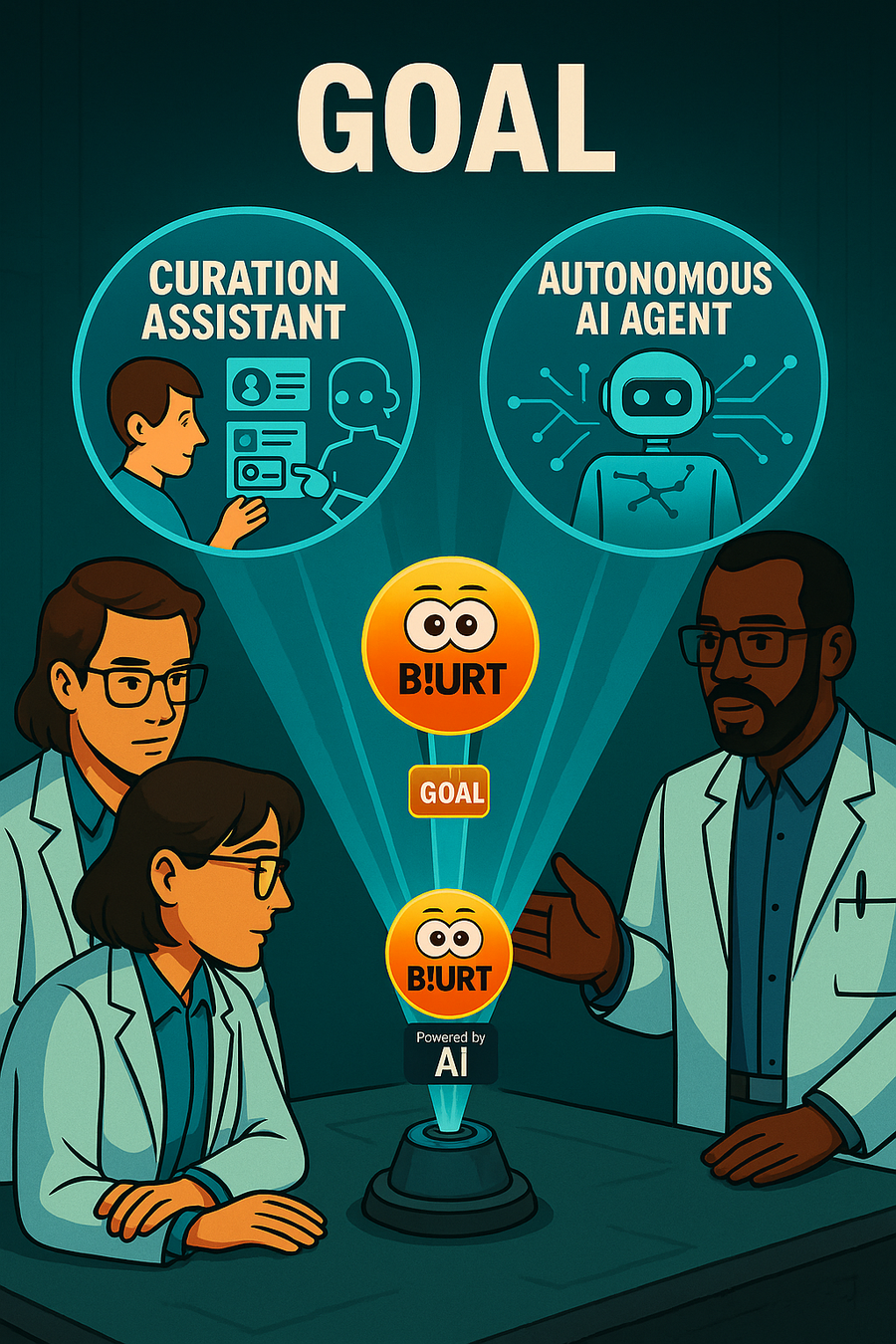
- an autonomous AI agent that continuously monitors accounts, identifies suspicious patterns, and highlights valuable contributors for curation bots,
- a curation assistant for groups, helping them make fairer and faster decisions,
- and more... why not blockchain interaction (transferring, upvoting, commenting..) via OAuth 2.0 authentication?
In short, my goal is not simply to create another piece of code, but to explore how AI can become a real ally for curation and community building on Blurt.
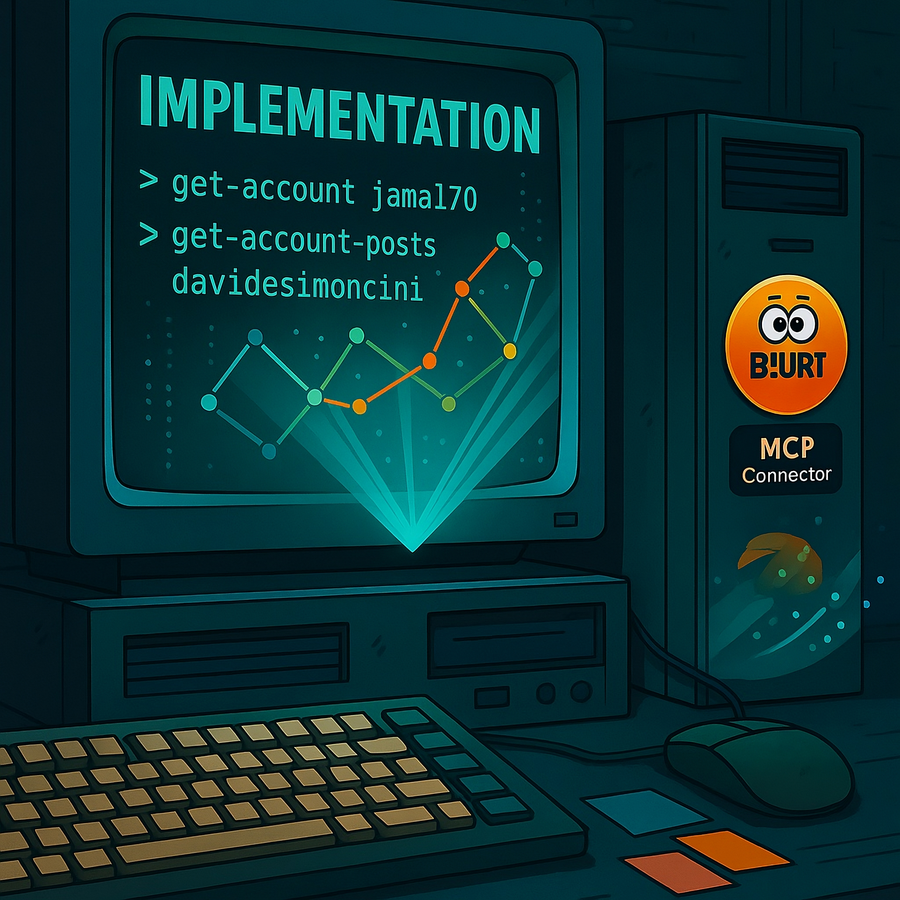
To turn the idea into something tangible, I started by building a basic MCP connector for Blurt. The goal was not to cover every possible action from the blockchain right away, but to focus on the essential tools that curators (and AI) would need in order to analyze accounts and their activity.
So far, my connector implements five core tools:
get-account– retrieves full account details from the Blurt blockchain. This includes low-level condenser data enriched with profile stats from Nexus. Useful for checking reputation, profile info, and balances.
get-account-history– retrieves operations from a Blurt account history, with optional filtering by type (votes, transfers, comments, etc.). This is the backbone for analyzing past behavior.
get-account-posts– fetches a list of posts related to a given Blurt account using the Nexus Layer-2 API. Ideal for checking content activity, publishing frequency, and engagement.
get-post– retrieves details of a single Blurt post, with the option to also include the full discussion (comments). Perfect for analyzing the quality and reception of an individual post.
get-publications– returns posts from Blurt’s Layer-2 Nexus API. With sort options like trending, hot, created, or payout, this allows AI to get an overview of what’s happening across the platform.
This first set of tools already makes it possible to query any account, any post, and even ranked publications directly from Blurt’s blockchain and Layer-2 APIs. In practice, this means an AI model can ask questions like:
- “What are the last 10 posts of this user?”
- “Show me the account history of X, but only their curation activity.”
- “Retrieve the most trending posts on Blurt right now.”
Once that data is in the hands of an AI model, the real power comes from how it can be analyzed. I experimented with different prompting strategies, from very detailed to very minimal. In the end, a medium-length structured prompt like the one below seems to provide the most consistent and useful results:
Analyze the account "account_name" using the following Blurt queries (non-exhaustive):
1. Blurt_get-account
2. Blurt_get-account-posts (last 30 posts)
3. Blurt_get-account-history (last 100 actions, filter for "vote", "transfer", ...)
4. Blurt_get-post (last 3 posts)

**Focus on these criteria:**

1. **Profile Authenticity**:
   - Creation date, bio, avatar, external links. Red flags?

2. **Activity and Engagement**:
   - Posting frequency, organic engagement (votes/comments), community.
   - Does the account rely on bots for votes?

3. **Vote Distribution (NEW!)**:
   - Self-vote rate: % of votes cast for its own posts.
   - Bot vs. organic votes: % of votes from bots (e.g., blurtbooster).
   - Vote reciprocity: Does the account participate in vote rings?

4. **Content Quality**:
   - Originality, effort, thematic consistency. Signs of plagiarism?

5. **Reputation**:
   - Flags, blacklists, suspicious transfers.

6. **Economic Behavior**:
   - Reward distribution (posting vs. curation), VESTS balance, power-downs, beneficiaries.

7. **Automated Behavior**:
   - Fixed posting times, repetitive content, automated votes.

**Conclusion**:
- Assign a risk score (0-100) and classify the account.
- Justify with evidence (e.g., "85% self-votes + 90% bot votes = Farmer").
This gives the AI a structured framework for evaluating accounts, not just based on a gut feeling but on verifiable, blockchain-level data.
The combination of MCP tools + structured prompts is what transforms AI from a “content generator” into a curation assistant.
To make the Blurt MCP connector accessible anywhere, I deployed it at:
👉 https://mcp.blurt-blockchain.com/mcp
This means you don’t need to run it locally — any AI supporting MCP can connect to it directly.
I tested the integration with three different AI systems: Claude (Anthropic), Le Chat (Mistral AI), and ChatGPT (OpenAI). Here’s my feedback:
- Claude (Anthropic)
Integration is possible but requires the Pro plan ($17/month) to enable Remote MCP for the web version and mobile app. On the desktop client, however, setup is straightforward and does not require a paid plan — you just need to edit the claude_desktop_config.json file to add the Blurt MCP server. Once configured, it works seamlessly.
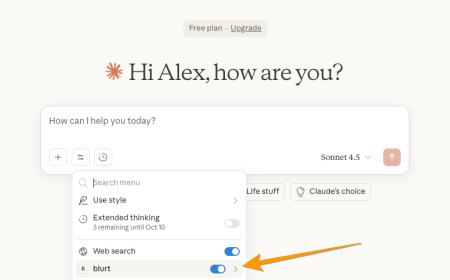
- Le Chat (Mistral AI)
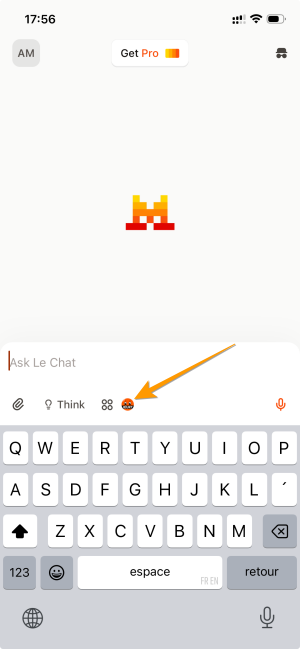
Here, integration is the simplest: it’s free and works out-of-the-box on both web and mobile. This makes Le Chat a great option for quick testing.
- ChatGPT (OpenAI)
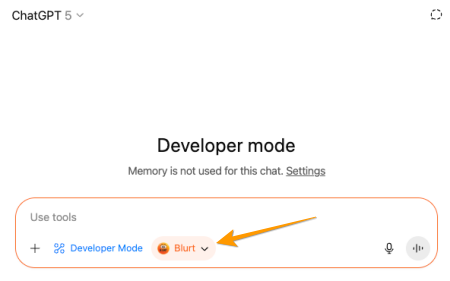
Available starting from the Plus plan ($20/month). Integration works in the web version (developer mode) but is not yet supported on the desktop client or mobile app. Setup is more fragile compared to Claude or Mistral, and tool calls sometimes fail due to early-stage MCP support.
In the end, I don’t think it’s such a bad thing that the easiest option right now is Le Chat. First, because it’s a French AI (yes, I admit it, I’m a bit chauvinistic 😄). And second, because Mistral’s models are open source, which means in the future it will be possible to run everything locally. That opens the door to even simpler agent-style workflows, for example by combining it with automation tools like n8n.
As part of this experiment, I tested the connector with Claude (Anthropic), Le Chat (Mistral), and ChatGPT (OpenAI).
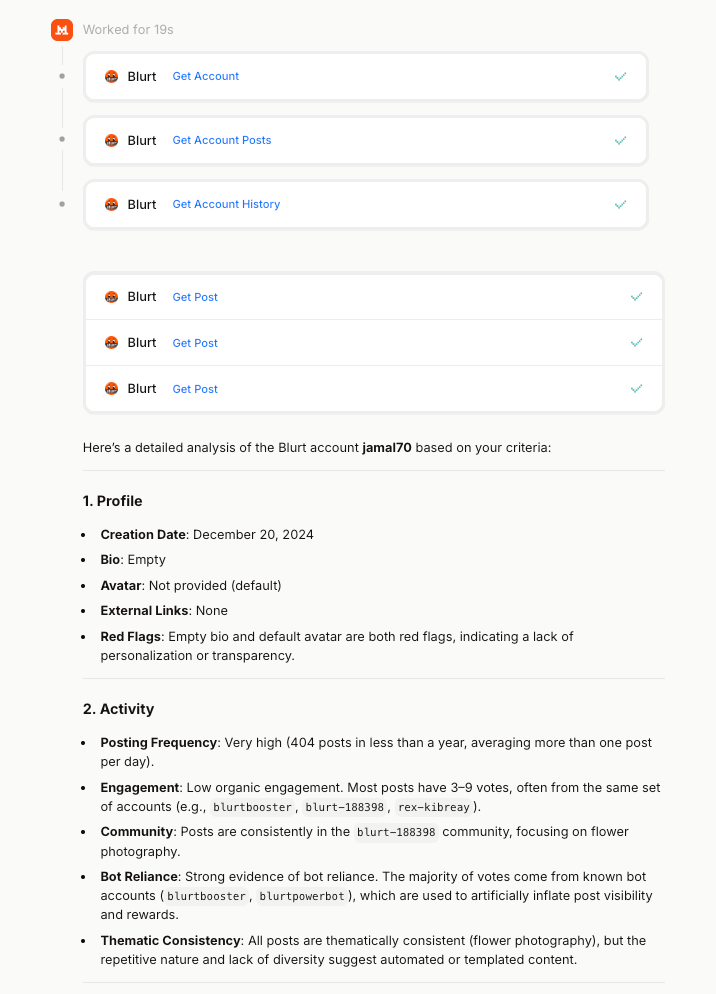
Claude produced the most detailed reports, ChatGPT still struggles with MCP integration, but I decided to showcase here Le Chat, because its output strikes a good balance: concise yet coherent, delivering useful summaries of strengths, weaknesses, and risks.
To make things concrete, I ran the analysis on two very different profiles:
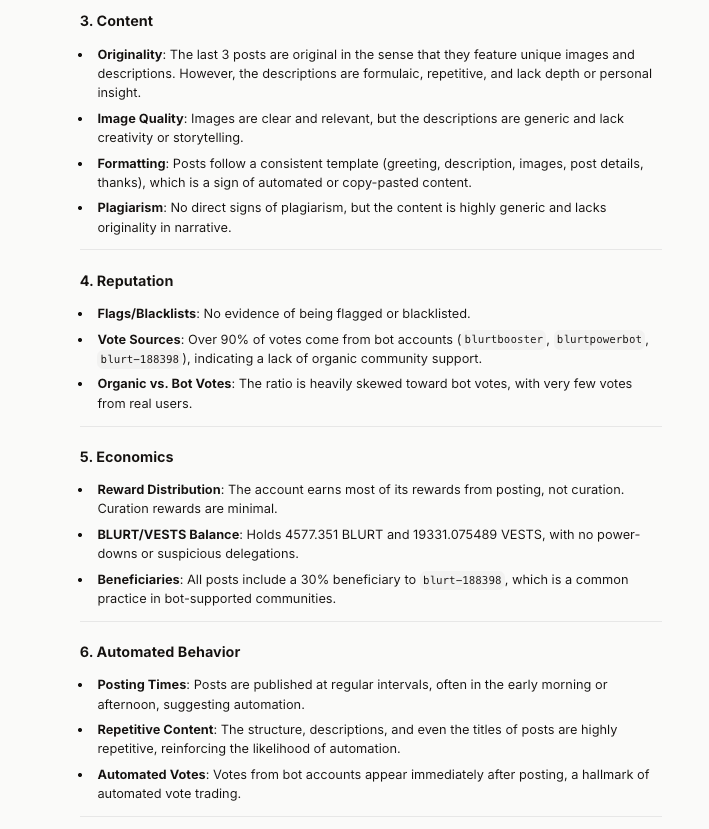
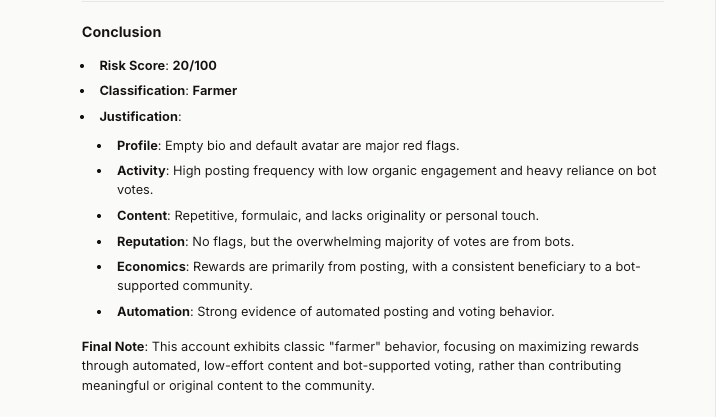
- @jamal70 – chosen because I noticed him on the BlurtBooster application channel.
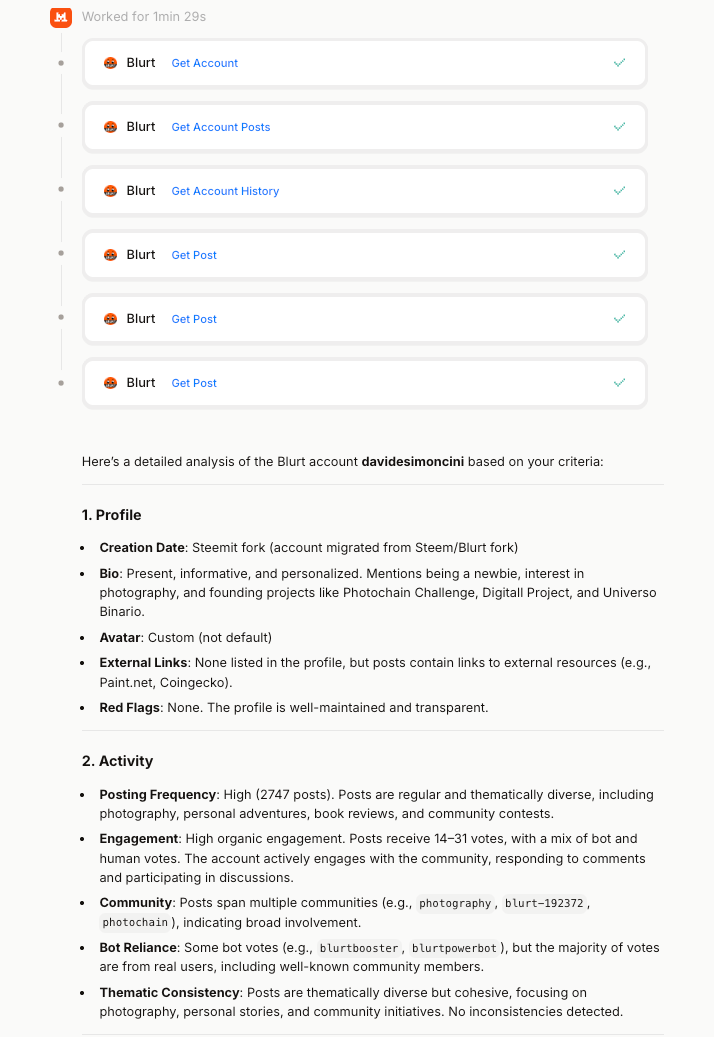
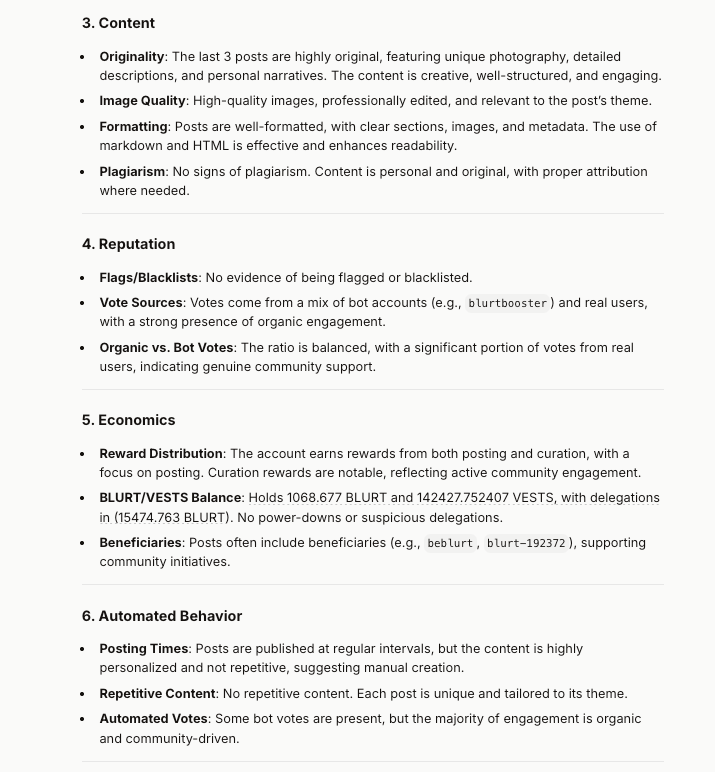
- @davidesimoncini – chosen because I know well his profile and publications.
Example 1: @jamal70
Example 2: @davidesimoncini
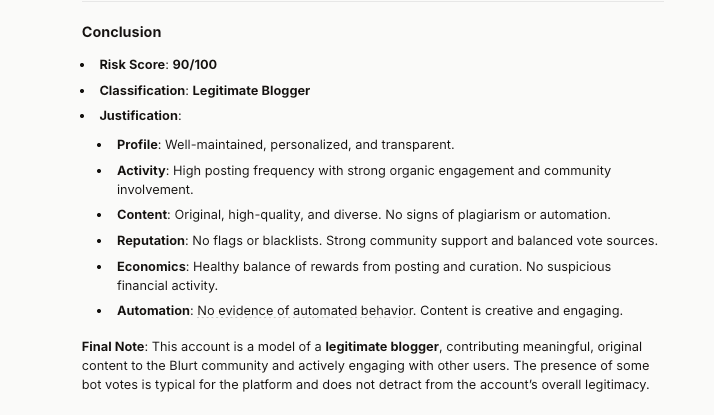
The contrast between these two accounts could not be clearer:
- @jamal70 shows red flags (empty bio, repetitive content, heavy reliance on bots).
- @davidesimoncini demonstrates strong community involvement and authentic contributions.
In short: what would take a human curator hours to verify was distilled by AI into actionable insights within seconds, without losing nuance.
Grok (xAI)
I haven’t tested it myself, but it seems possible to use MCP connectors with Grok through third-party solutions.
Unlike Claude which supports MCP natively, Grok requires workarounds:
- MCP SuperAssistant (Chrome Extension) – free and simple, works directly in the web interface.
- Cursor/Cline setup – via
~/.cursor/mcp.json, requires an xAI API key. - Zapier MCP – more complex, for automation workflows.
So, while Grok doesn’t yet offer native MCP support, it looks like integration is possible if you’re willing to experiment with these external tools.
Too often, when we talk about AI on Blurt, the conversation gets stuck on its worst use cases: spammy posts, copy-paste content, or generic text illustrated with random Pixabay images. But as I’ve tried to show, AI can also serve the exact opposite purpose: to protect quality and strengthen curation.
Curation is the backbone of Blurt. It’s what ensures that real creators get rewarded and that the platform doesn’t drown in noise. But manual curation is incredibly time-consuming and prone to errors. Automated curation without intelligence isn’t better—it can reward the wrong accounts and discourage genuine contributors.
This is where AI has a role to play. Not to replace human curators, but to assist them—to sift through data, detect suspicious patterns, highlight authentic contributions, and provide structured insights. Models like Claude and Mistral have already shown that, with the right connector, they can produce reports that would take a human curator hours to compile.
The proof of concept I’ve built with the Blurt MCP connector is just a first step. Right now, it can retrieve account details, histories, posts, and trending publications. But the potential is much larger: one day, we could imagine an autonomous AI agent that works side by side with curation groups, continuously monitoring accounts, flagging risks, and amplifying the voices that truly matter.
Of course, AI is not perfect. It still needs to be guided, and it will never replace human judgment. But if we, as a community, learn to use it wisely, AI can become an ally instead of a threat—a way to reward quality, fight content farming, and make Blurt a stronger, fairer ecosystem.
So I want to open the discussion:
👉 Do you see AI as a danger to our community, or as a tool that can help us make curation smarter?
👉 Would you like to see this proof of concept evolve into a real agent for Blurt curators?
👉 Which AI do you personally use (Claude, Mistral, ChatGPT, Grok, or others), and what made you choose it?
I look forward to hearing your thoughts.
✅ If you found this exploration valuable…
- 🔁 Reblog to spread awareness about how AI can boost curation on Blurt.
- 👀 Follow @nalexadre for more deep-dives on AI, curation, and blockchain innovations.
- 🗳️ Vote for @nalexadre as Witness if you believe in innovation, transparency, and smarter tools for our community.
via BeBlurt: https://beblurt.com/@nalexadre/witness
via Blurt Wallet: https://blurtwallet.com/~witnesses?highlight=nalexadre
💬 Curious about the MCP connector?
Share your thoughts in the comments — let’s discuss how AI can best serve curators and creators.
🚀 Want to experiment?
Try out the connector, or imagine what an autonomous AI curation assistant could look like.
Let’s keep building Blurt — stronger, fairer, and AI-powered.
| @nalexadre | Top 20 Witness on Blurt & BeBlurt Founder |
Comments