A few days ago, I published a post titled “🤖 How AI Can Help Curation on Blurt”, where I argued that AI doesn’t have to be the problem — it can actually be part of the solution. While many still see it as a tool that floods blockchains with low-quality, reward-farming content, I suggested a different perspective: AI can empower curators, helping them surface and reward genuine creators instead of spammers.
Back then, I saw OpenAI (ChatGPT) as the “black sheep” among its competitors like Anthropic (Claude) and Mistral (Le Chat), mainly because it had failed to properly integrate custom MCP (Model Context Protocol) connectors — a limitation that kept it from being a real game-changer from a developer’s perspective.
So when OpenAI’s DevDay 2025 dropped few days ago, it completely flipped the script. Suddenly, ChatGPT wasn’t the closed box it used to be — it turned into something developers can actually build on.
What caught my attention wasn’t just the hype, but the substance: ChatGPT Apps, the new AgentKit, and deeper integration with MCP connectors. Together, they finally make ChatGPT feel like a real platform — one where you can wire in your own tools, data, and logic without fighting the model’s walls.
The more I look at it, the more it feels like OpenAI isn’t just building a chatbot — it’s building an OS-like platform. With the arrival of ChatGPT’s own App Store and native app execution running inside the AI itself, we might be entering a new era where:
Apps don’t launch on phones anymore — they launch on AI.
Imagine a future where developers release their apps first for ChatGPT, and only later for iOS or Android. It sounds bold, but given the current trajectory, it’s not that far-fetched.
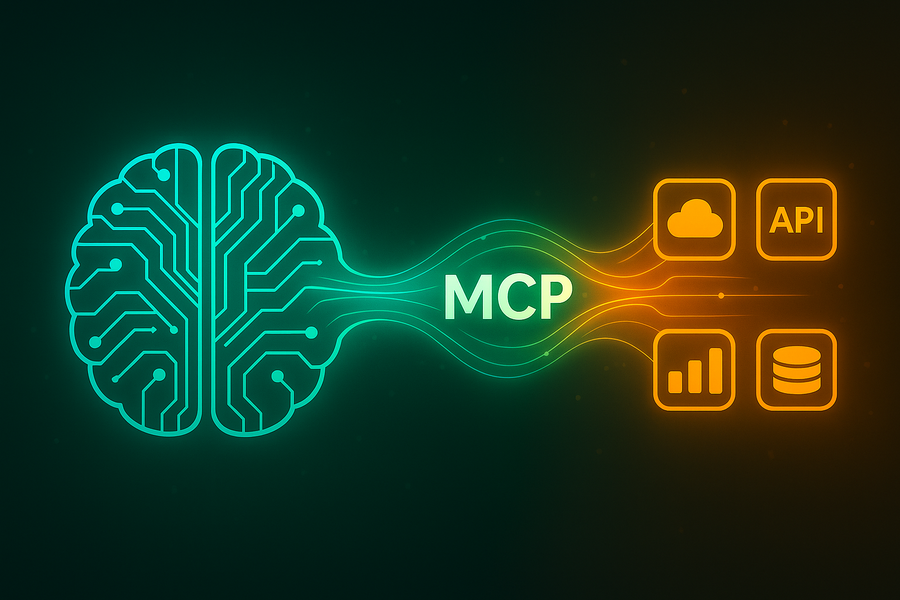
⚙️ Quick refresher on what MCP connectors are
If you’re not familiar with MCP (Model Context Protocol), it’s basically a new open standard that defines how an AI model can securely talk to external systems — APIs, databases, apps, or even your local tools.
The idea originally came from Anthropic, and it’s quickly becoming the industry’s go-to approach for making large language models more connected and context-aware.
Instead of locking a model inside a single interface, MCP gives it a structured way to pull information, trigger actions, or write data back through well-defined endpoints.
Think of it as a bridge layer between the model and the world around it.
It tells the AI: “Here’s what you’re allowed to access, here’s how you can use it, and here’s how to talk to it safely.”
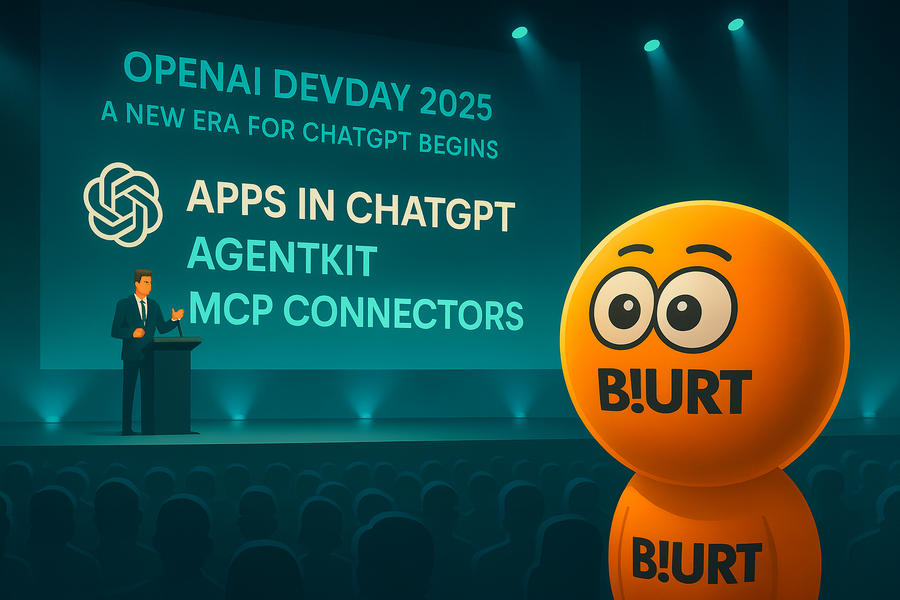
🚀 What OpenAI’s DevDay 2025 Brings to ChatGPT
If you’ve never heard of it, OpenAI’s DevDay is a bit like what Apple, Google, or Meta do with their annual conferences — except this one is all about AI. It’s when OpenAI unveils what’s next for ChatGPT and its developer ecosystem.
This year’s edition marks a clear turning point. ChatGPT is no longer just a conversational model — it’s becoming a real platform.
To give a sense of scale: it now counts over 800 million active users, growing by about 100 million every two months, and more than 4 million developers are already building on top of it.
And with this latest wave of updates, ChatGPT just unlocked three major things that completely change how it can be used: Apps inside ChatGPT, AgentKit, and native MCP connectors.
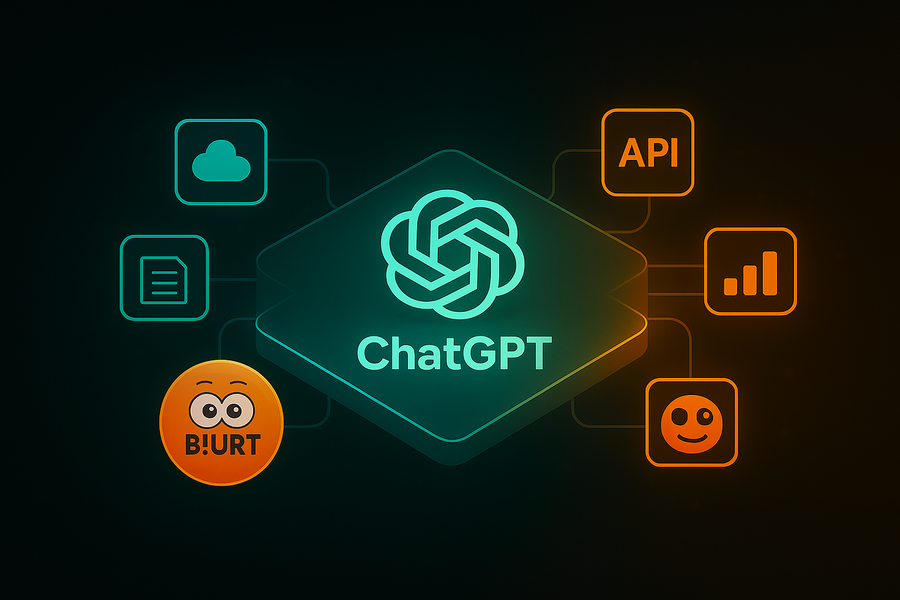
📱 Apps in ChatGPT — beyond just "@-mentioning" a tool
When I first heard about “Apps in ChatGPT,” I imagined something like being able to @-mention a tool, like @Blurt get my latest post stats. But the reality goes far beyond that.
Apps are now first-class citizens inside ChatGPT — full, interactive components that live inside the conversation. They can render interfaces, display dynamic content, keep persistent state, and even coordinate actions with the model.
In other words, these aren’t simple calls to external APIs — they’re embedded mini-applications, running securely within ChatGPT itself.
Here’s what’s new:
- 🧩 Apps SDK: a full developer kit that extends MCP with UI and logic layers (think of it as MCP + front-end capabilities).
- 💬 Interactive UI: buttons, tables, toggles, or custom layouts can now appear right inside the chat — not just text.
- 🧠 Context persistence: the app remembers previous interactions, like an actual web app session.
- 🔐 Permission control: every connector or app still goes through MCP’s permission layer, so users remain in control.
With this, a developer can publish an app to the ChatGPT ecosystem — and users can discover, install, and use it directly in chat. Some have already started calling this the “App Store for AI” — and it’s not an exaggeration.
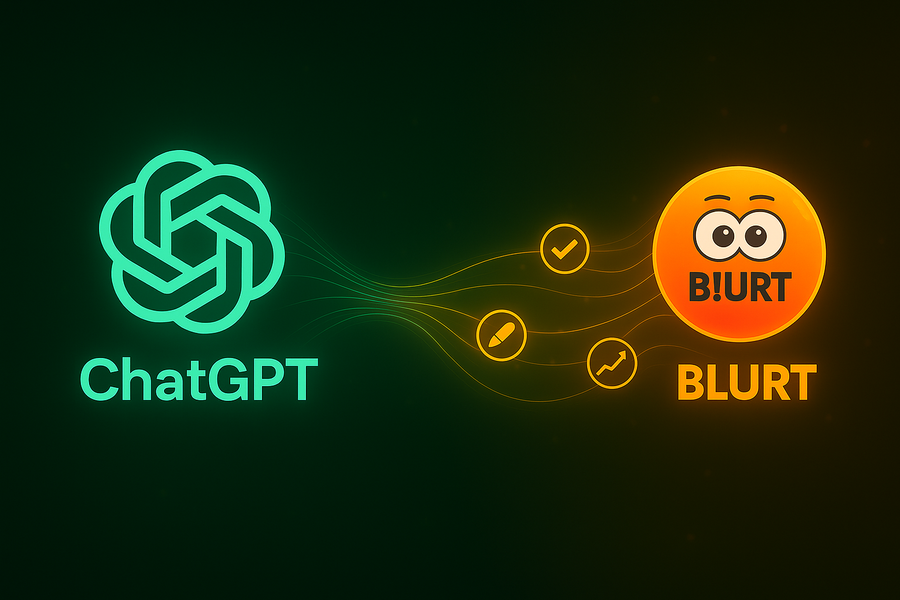
🤖 AgentKit — your personal automation layer
If Apps let you connect and interact, AgentKit is what lets you automate.
It’s a full framework to build autonomous assistants that can plan, execute, and evaluate actions. They can combine multiple steps, tools, or even other agents — all from within ChatGPT.
AgentKit includes:
- 🧩 Agent Builder — a visual “no-code” editor for defining workflows (“if this, then that” logic).
- 🗂️ Connector Registry — where your MCP tools (like the Blurt connector) can be registered with explicit permissions.
- 🧱 ChatKit — reusable components for agents that need to present UI elements to the user.
- 🧭 Evaluation and guardrails — built-in controls to monitor, debug, and prevent misbehavior.
The best part: all of it runs natively inside ChatGPT. No need for external automation platforms (n8n or others) — the orchestration happens in the same space as the conversation.
Imagine this: you could soon create a “Blurt Curator Agent” that automatically summarizes trending posts, detects spam patterns, and suggests genuine creators worth curating — all running seamlessly in ChatGPT.
🧩 MCP is still the backbone
Even with all this new power, MCP remains the foundation. It’s what ensures that ChatGPT Apps and Agents can securely talk to external systems like Blurt, Discord, Notion, or any API you define.
But now, MCP isn’t just about access — it’s about integration. The new Apps SDK extends it with metadata, UI hooks, and state management, turning simple endpoints into fully interactive capabilities.
If you’ve built an MCP connector (like my Blurt one), you can now wrap it into a full-fledged ChatGPT App — giving users both the data and the experience, without leaving the chat.
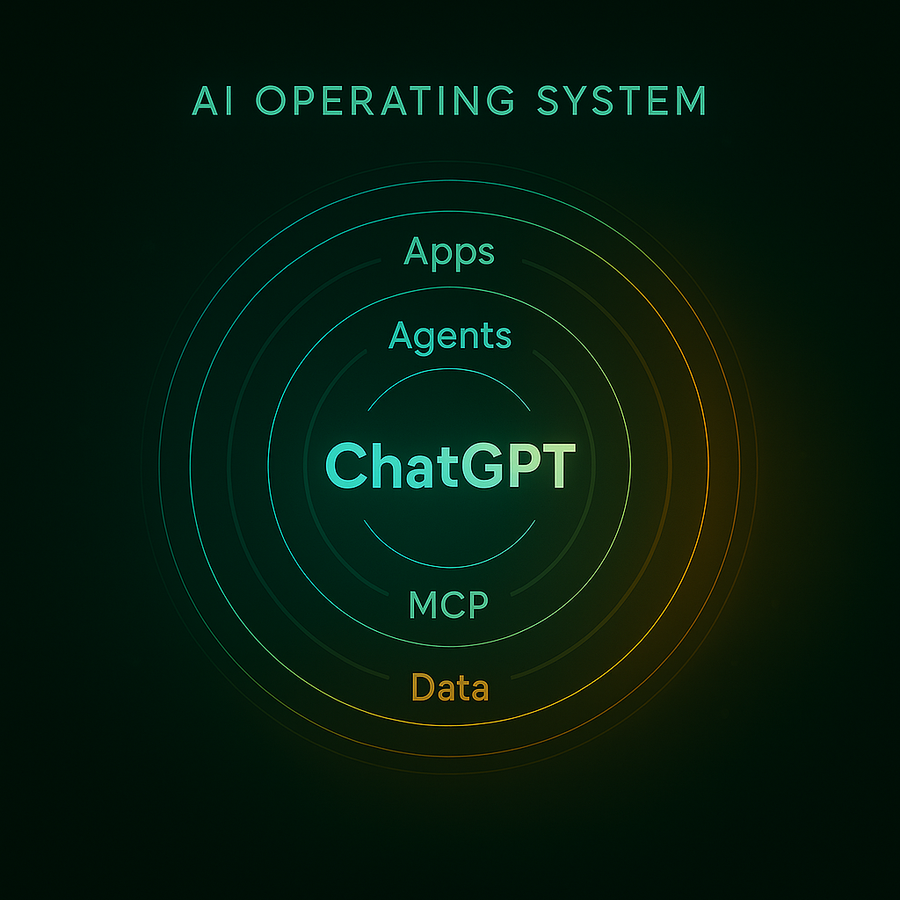
🌐 The Bigger Picture — ChatGPT as an AI Operating System
OpenAI didn’t just improve ChatGPT; they redefined its role. It’s no longer just a model — it’s becoming the OS of the AI era.
Between Apps, AgentKit, and MCP, developers now have:
- A standard for connecting to anything (MCP)
- A way to automate actions (AgentKit)
- A way to present it all interactively (Apps SDK)
For builders, this means one thing:
You can build once, connect it via MCP, wrap it as an App, and ChatGPT will do the rest — from UI to logic to orchestration.
But it also raises a much bigger question — one that hits close to home for communities like Blurt.
If tomorrow’s users interact with the internet primarily through AI interfaces — not browsers, not search engines — then will new developers still want to build a classic frontend or dApp for Blurt?
Or will they prefer to build directly inside ChatGPT (or other AIs), where the discovery, curation, and even publishing happen natively — through natural conversation?
Because here’s what’s already shifting:
- Generative AI is changing how people find and access information, compressing the entire search funnel.
- AI-generated responses reduce the need for users to click away — resulting in fewer visits to traditional websites.
- Some studies already show that AI-driven traffic converts up to 23× better than classic SEO leads.
- And as “AI search” expands, a growing share of visibility and interaction may never leave the chat window.
This points to something deeper: we may be entering an era of web invisibility, where the surface layer of the internet — websites, buttons, menus, forms — slowly fades away.
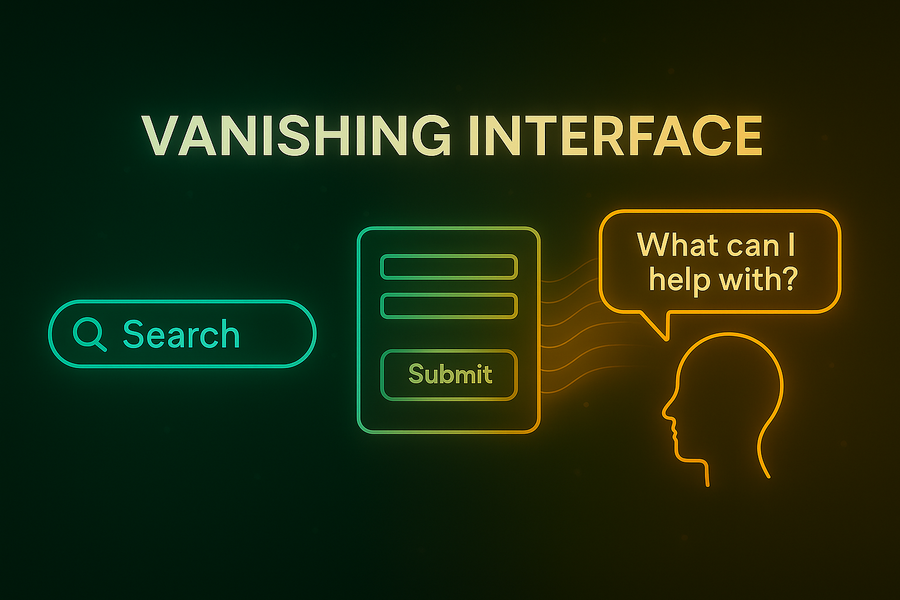
The interface becomes language. The “click” becomes a sentence. The “UI” becomes the conversation itself.
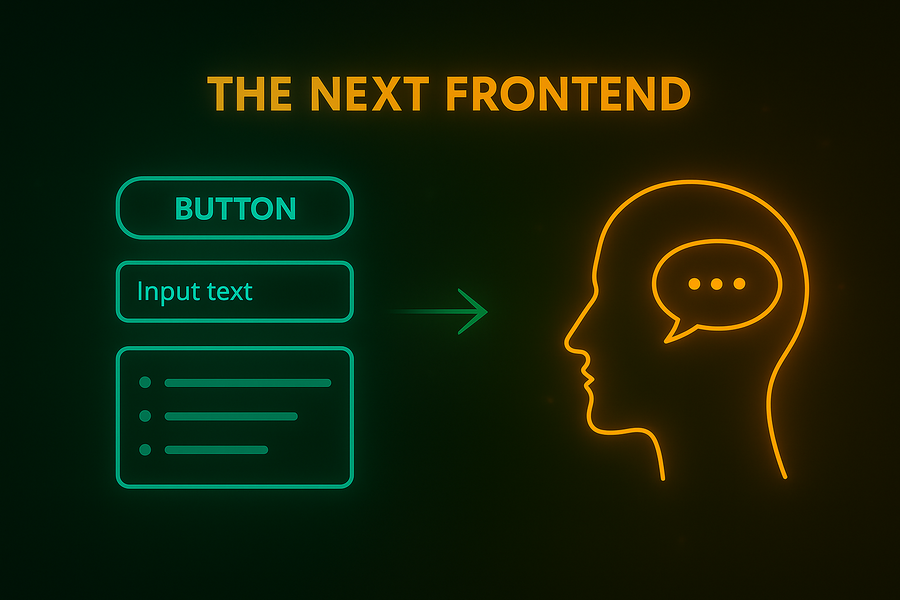
For a platform like Blurt, this raises an existential design question: should we keep building graphical frontends… or start designing conversational ones?
Maybe, in the next wave of the web, the new frontend isn’t visual — it’s cognitive.
And the first Blurt app people use won’t be on iOS or Android… …it’ll live inside the AI that already knows what they want to read, post, or curate.
🧪 What’s Next — Blurt × AI Integration
All these developments have only deepened my motivation to keep experimenting with how Blurt and AI ecosystems can truly work together.
Up to now, I’ve been running multiple tests using my Blurt MCP connector — fetching data, analyzing trends, testing curation logic. But this new wave of tools opens the door to something far bigger: real, two-way interaction.
I’m now exploring how to implement OAuth support inside the Blurt MCP connector, so ChatGPT could not only read from the blockchain — but also act on it.
Imagine being able to:
- 🔼 Vote or curate directly from within ChatGPT,
- 💬 Comment on a post through a conversational interface,
- 🪙 Claim rewards, schedule posts, or even make transfer,
- 🔔 Get real-time notifications for trending posts or mentions.
And on the other side, I’m eager to experiment with the new ChatGPT Apps SDK to display Blurt content natively inside ChatGPT — posts, discussions, and curated lists rendered directly in the chat interface, with context-aware AI assistance on top.
This could transform ChatGPT into a living dashboard for decentralized content —
where you don’t just consume the blockchain, you interact with it intelligently.
There’s a lot still to build, but for the first time, it feels like the pieces are finally aligning:
Blurt’s openness, MCP’s flexibility, and ChatGPT’s new agent + app capabilities are all converging toward the same goal — a truly connected, AI-augmented blockchain experience.
The next step isn’t just connecting AI to Blurt —
it’s making Blurt speak the language of AI.
Stay tuned — because that’s exactly what I’m working on next.
✅ If you found this exploration valuable…
- 🔁 Reblog to help spread the vision of an AI-integrated Blurt.
- 👀 Follow @nalexadre for more deep-dives on how AI, blockchain, and open protocols like MCP are reshaping online communities.
- 🗳️ Vote for @nalexadre as Witness if you believe in innovation, transparency, and smarter tools for Blurt’s future.
via BeBlurt: https://beblurt.com/@nalexadre/witness
via Blurt Wallet: https://blurtwallet.com/~witnesses?highlight=nalexadre
💬 Curious about the Blurt MCP connector or the coming OAuth integration?
Share your thoughts and ideas in the comments — let’s explore what full AI-to-Blockchain interaction could look like.
🚀 Want to experiment?
Try out the connector, or imagine your own ChatGPT App for Blurt — one that displays posts, runs analytics, or automates curation.
Let’s keep building Blurt — smarter, more open, and deeply connected to the AI era.
| @nalexadre | Top 20 Witness on Blurt & BeBlurt Founder |
Comments